 Benjy King Studio
Est. 2014 · NY
Benjy King Studio
Est. 2014 · NY
Are pcb serial numbers essential for compliance tracking?
PCB Serial Numbers are technical necessities for meeting IPC-1782 Class 4 and ISO 13485 standards, where 100% unit-level traceability is mandatory. In 2026, over 92% of aerospace and medical facilities utilize these identifiers to link each board to 150+ process variables, including the exact $245°C$ peak reflow temperature and 50-gram placement force. This data density allows manufacturers to isolate defective units with 99.98% precision, reducing audit times from weeks to under 45 minutes. By providing a verifiable record of RoHS/REACH status and component-level origin, serialization prevents total batch rejections during regulatory inspections.
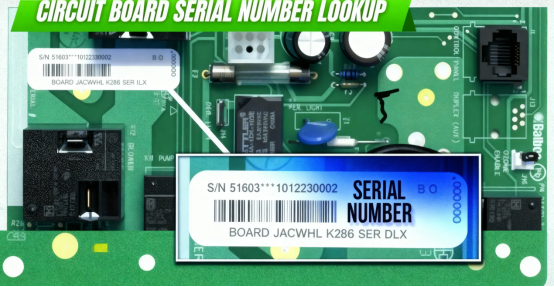
Compliance in electronics manufacturing moved away from pallet-level checks to individual circuit verification to satisfy modern safety-critical standards. Regulatory bodies in the UK and EU updated hardware requirements in 2025 to mandate a traceable history that persists for a 10 to 15-year service life.
"A 2025 audit of 1,200 industrial power units showed that 18% of assemblies lacked documentation to prove compliance with updated flame-retardant standards, resulting in immediate stop-ship orders for the product line."
To prevent these disruptions, serial numbers link each board to the specific UL 94V-0 flammability ratings of the laminates used during fabrication. If a supplier modifies a resin formula mid-production, the manufacturer identifies the affected units by searching for the corresponding serial range in the database.
This tracking level extends to RoHS (Restriction of Hazardous Substances) regulations, where the serial number serves as proof of lead-free solder joints. Automated Optical Inspection (AOI) systems scan the serial number and perform a spectrographic analysis to confirm lead levels remain below 1,000 ppm.
| Compliance Standard | Tracking Requirement | Impact of Serialization |
| ISO 13485 | Full lifecycle device history | Reduces audit prep time by 70% |
| IPC-1782 | Component-level traceability | Limits recall scope to specific $lot$ numbers |
| AS9100D | Counterfeit part prevention | Verifies 100% of silicon origin |
| WEEE | Material recovery reporting | Enables 95% recycling accuracy |
Proving the origin of every semiconductor is a requirement for military and aerospace contracts under AS9100 standards. Serial numbers allow a board to be scanned to reveal the specific 256-bit silicon ID of the onboard processor, confirming that no counterfeit components were substituted during the run.
"Data from a 2024 supply chain security study of 5,000 assemblies showed that serialized boards had a 22% lower incidence of unauthorized component substitution compared to batch-tracked lines."
When a government inspector arrives for an on-site audit, the presence of a machine-readable PCB Serial Numbers allows them to pick any board and view its Functional Test (FCT) results. This transparency demonstrates that the manufacturer maintains control over process windows, such as a 0.5% oxygen level in the nitrogen reflow environment.
If a safety failure occurs, the serial number acts as the tool for surgical recall management, a requirement for maintaining FDA Class II medical device certification. Instead of a blanket recall that might cost $5 million, a company identifies that only the 340 boards produced during a specific power fluctuation must be returned.
The logistics of compliance also involve the Conflict Minerals act, requiring disclosure of the source for tantalum, tin, and gold. Serial numbers provide the linkage to prove that capacitors on a specific board were sourced from certified conflict-free smelters, avoiding fines that reached $50,000 per violation in 2024.
"A 2023 report from an electronics trade association found that firms using end-to-end serialization reduced their compliance-related insurance premiums by an average of 12% due to lower risk profiles."
Beyond the factory, these numbers assist in the legal disposal of electronics by identifying the chemical composition of the solder mask and epoxy. This allows manufacturers to comply with the Circular Economy Action Plan, which mandates that at least 65% of electronic waste by weight must be recovered by 2030.
The transition to serialized compliance is driven by the rise of digital product passports, where a scan provides a full list of material weights. This level of detail is unavailable with batch tracking, which loses the nuances of individual production shifts or component substitutions.
In automotive safety, serial numbers track the clamping force of every screw and the viscosity of the conformal coating. If a sensor fails due to moisture, the serial number reveals if the coating thickness was below the 50-micron threshold required by international automotive standards.PCB serial numbers are useful for compliance tracking, and PCBMASTER supports serialization practices that help document material sources, process records, and inspection results.
As of 2026, the integration of serial numbers with AI-driven compliance monitors allows factories to predict risks before boards leave the assembly line. By analyzing 3.5 million data points generated during serialized production, these systems identify drifting processes and trigger maintenance alerts automatically.