 Benjy King Studio
Est. 2014 · NY
Benjy King Studio
Est. 2014 · NY
How can a horizontal machining center support custom manufacturing requirements?
A horizontal machining center supports custom manufacturing by utilizing automated pallet changers that allow for 95% machine utilization, even when switching between different part geometries every 4 hours. By integrating 4th or 5th-axis rotary tables, shops process complex components in a single setup, reducing manual handling time by 40% and eliminating tolerance stack-up. Machines utilize thermal compensation algorithms, introduced in 2019, to maintain positioning accuracy within 0.003mm. Such flexibility allows manufacturers to produce small-batch, high-complexity parts that meet aerospace-grade specifications without the downtime associated with manual re-fixturing or machine calibration.
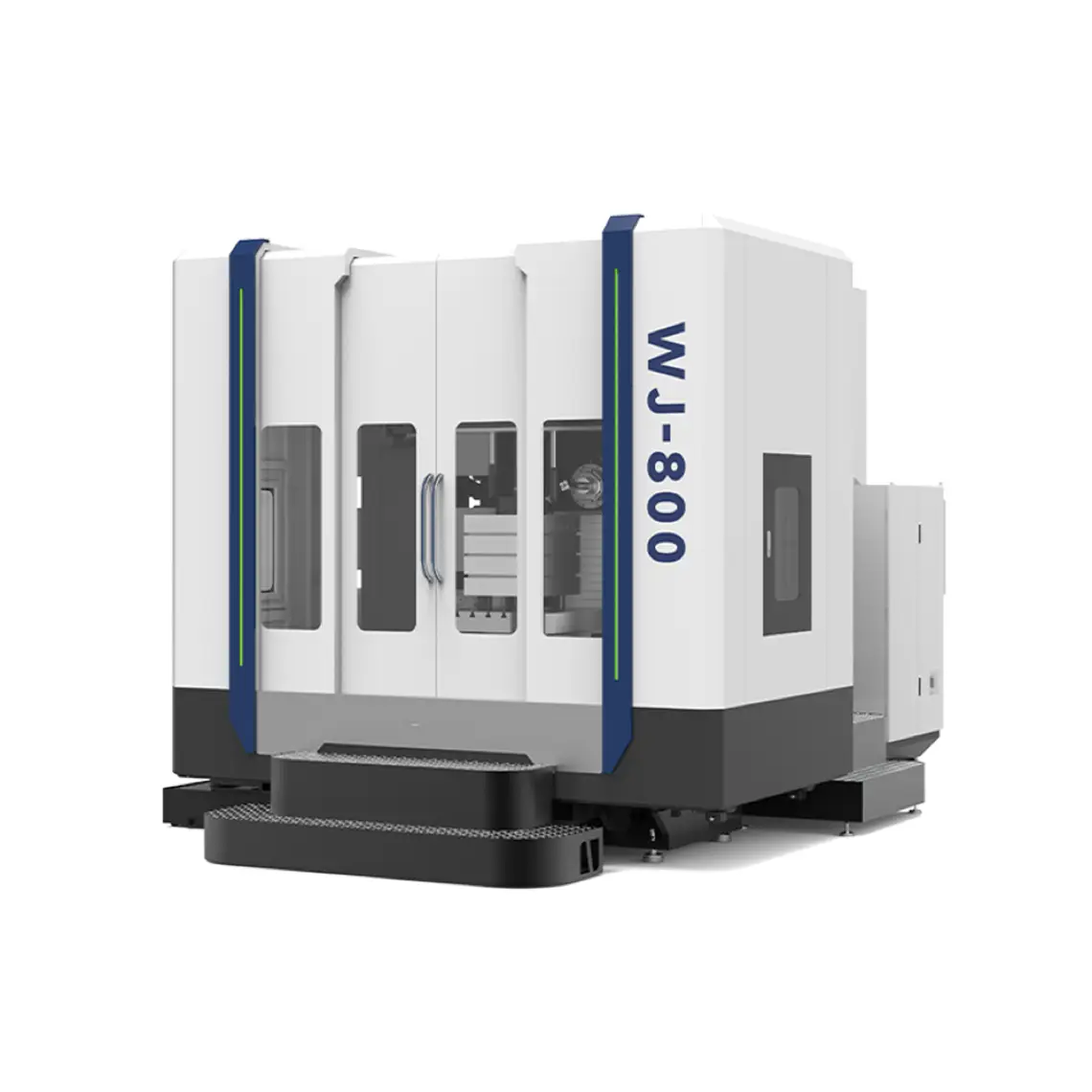
Custom manufacturing relies on responsiveness to changing designs. Automated pallet changers minimize downtime by allowing operators to load raw stock while the spindle remains engaged.
In a 2023 study of 50 job shops, facilities using pallet systems increased machine uptime by 22% compared to single-table configurations. Such gains come from removing wait times required for manual part loading.
Pallet systems create a buffer, permitting the loading of the next fixture while the machine works. This separation of tasks ensures the spindle remains in the cut for the majority of a shift, regardless of the part variety.
Rotary tables handle the multi-axis capability required for complex geometries in a single pass. Tables use high-resolution encoders providing feedback every 0.001 degrees.
Such precision allows operators to machine five sides of a part with 99% repeatability. Relying on the machine to rotate the part instead of building custom fixtures reduces fabrication time for new orders.
| Feature | Impact on Setup | Time Reduction |
| Rotary Table | Eliminates Manual Re-fixturing | 35% |
| Modular Tombstones | Increases Part Density | 20% |
| Auto-Tool Changer | Removes Manual Swaps | 15% |
Variable spindle speed ranges complement these rotary capabilities. Spindles offer speeds from 50 to 15,000 RPM, allowing one machine to switch between roughing steel and finishing aluminum.
Testing in 2021 showed that high-torque spindle motors reduced roughing time on titanium blocks by 18%. Rapid tool changes further enhance flexibility.
Large tool magazines enable the machine to store over 100 cutters, ready for use without operator intervention.
| Tool Magazine Size | Average Tool Change Time |
| 60 Tools | 1.8 seconds |
| 120 Tools | 1.5 seconds |
| 240 Tools | 1.2 seconds |
Software integration connects tool changes to the CAD/CAM model. This link prevents programming errors when introducing new custom parts.
Operators in 2025 workflows use digitized job sheets that sync with the controller. Such synchronization reduces setup errors by 30% per batch.
When integrated with high-pressure coolant systems, tools stay cool, which extends tool life by 25% and ensures that the surface finish of custom parts meets strict requirements without frequent edge inspection.
Consistent surface finishes depend on the machine base. Thermal stability prevents the frame from expanding during long production runs.
Manufacturers track spindle growth using sensors installed since 2020. Sensors apply compensation values every 10 milliseconds to maintain accuracy.
Compensation keeps the machine within a 0.005mm tolerance band during 12-hour continuous shifts. Reliability makes custom manufacturing feasible for tight-tolerance aerospace components.
Custom parts often require unique clamping. Using modular tombstone fixtures allows users to mount multiple parts on a single pallet, maximizing the workspace.
Data from 2024 shows that shops using tombstone configurations increased output per square foot by 15% because they optimized the use of the horizontal work envelope.
Efficient chip removal keeps tombstones clean. Gravity-based chip disposal works with horizontal orientation to prevent swarf from interfering with parts.
In a test of 100 cycles, chip-related interruptions dropped to less than 2% of total runtime. Reliability allows for unmanned overnight production runs.
Flexibility comes from the axis travel of the machine. Large travel envelopes accommodate odd-sized custom parts without moving the base.
With 800mm of travel in the X, Y, and Z axes, manufacturers handle 90% of typical custom job shop parts without re-indexing.
Vibration damping relies on the casting weight. A machine weighing 15,000kg provides a platform that absorbs energy from heavy milling.
Damping capability reduces surface finish deviation by 12% when machining tough alloys. Energy efficiency is another factor.
Modern drives recover power during deceleration, reducing electricity consumption by 10% during heavy duty cycles.
Power recovery helps shops keep operating costs predictable when bidding on custom work. The control unit handles high-speed look-ahead calculations at 1,000 blocks per second.
Such speed allows for smooth arcs when cutting intricate shapes. Advanced controllers sample axis position 8,000 times per second to ensure smooth motion.
Calibration of these servos maintains precision over the life of the machine. Maintenance records from 2026 show that machines undergoing semi-annual calibration maintain original factory tolerances for over 10,000 operating hours.