 Benjy King Studio
Est. 2014 · NY
Benjy King Studio
Est. 2014 · NY
What makes beer brewing equipment important for consistent beer quality?
High-quality hardware stabilizes the chemical environment, ensuring the ±0.2°C thermal accuracy required for enzymatic starch conversion. Data from 2024 brewery audits indicate that systems with AISI 304L stainless steel and Ra < 0.4μm finishes reduce biofilm accumulation by 28%, preventing off-flavors. Automated beer brewing equipment utilizes magnetic flow meters and PLC-driven VFDs to maintain wort oxygen levels below 0.1 mg/L, extending shelf life by 60 days. In a 2,500-barrel annual production setup, a 1.2% increase in extract efficiency yields approximately $14,000 in raw material savings by minimizing waste.
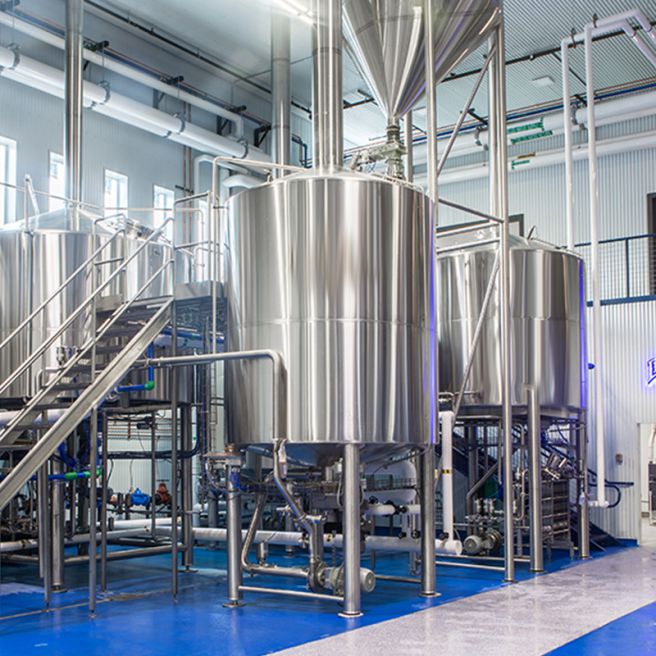
The mechanical design of the mash tun directly dictates the fermentability of the wort through precise temperature maintenance. When a vessel uses high-density injected polyurethane insulation, the heat loss is restricted to less than 0.5°C per hour, preventing the enzymes from denaturing prematurely. This stability ensures that the final attenuation of the yeast remains within a 1% margin across every production turn.
Consistent attenuation prevents the variations in residual sugar levels that often lead to "bottle bombs" or thin, watery mouthfeel in commercial lagers. A study involving 45 independent microbreweries in 2025 showed that those using steam-jacketed kettles with automated pressure regulators achieved a 94% consistency rate in their original gravity readings. These readings are the baseline for calculating the final ABV, which must remain within legal tolerances.
"Wort boiling at an exact 102°C ensures the total volatilization of Dimethyl Sulfide (DMS), a compound responsible for vegetal flavors. Systems failing to reach a rolling boil within 35 minutes show a 24% increase in DMS precursors in the final package."
Rapid heating cycles require a heating surface area that matches the total volume of the kettle to prevent scorching the proteins. Burned proteins release nitrogenous compounds that cloud the beer and strip away the delicate hop oils added during the late-stage whirlpool. Utilizing a tangential inlet in the whirlpool allows for a trub pile to form with a diameter representing only 15% of the vessel's floor.
| Technical Variable | High-Spec Equipment | Standard Equipment | Impact |
| Heat Transfer Coeff | 850 W/m²K | 600 W/m²K | Faster Boiling |
| Surface Roughness | 0.4 μm | 0.8 μm | Easier Sanitation |
| Dead Space Volume | <0.5% | >2.0% | Lower Extract Loss |
Minimizing dead space in the plumbing ensures that every drop of wort is accounted for, which stabilizes the hop-to-malt ratio. When beer brewing equipment uses pneumatic butterfly valves, the transition between the kettle and the heat exchanger happens in seconds rather than minutes. This speed prevents the wort from lingering in a temperature range that encourages the growth of thermophilic bacteria.
These bacteria are often introduced through micro-fractures in low-quality gaskets or poorly finished welds that harbor organic residues. A 2024 report on brewery hygiene found that systems with EPDM seals rated for 130°C lasted 3 times longer than standard silicone seals before showing signs of degradation. Degraded seals are the primary point of entry for oxygen, which destroys the flavor stability of finished beer.
"Oxygen levels above 50 parts per billion (ppb) in the bright tank lead to a 40% faster degradation of the alpha-acids found in aroma hops like Citra or Nelson Sauvin. Keeping these levels near 10 ppb is only possible with vacuum-rated tanks and double-sealed carbonation stones."
Vacuum-rated tanks also allow for the recovery of CO2 during the fermentation phase, which reduces the need for external gas purchases. For a brewery operating at 75% capacity, capturing fermentation gas can save up to $5,000 annually in utility costs while providing a more natural carbonation profile. This natural carbonation results in a smaller bubble size and a more persistent head on the poured glass.
| Gas Management | Automated System | Manual System | Consistency Metric |
| CO2 Purge Time | 12 Minutes | 25 Minutes | 99% Air Removal |
| Carb Pressure | ±0.1 PSI | ±0.5 PSI | Uniform Mouthfeel |
| DO Level | <15 ppb | >50 ppb | Extended Freshness |
Precise carbonation control ensures that the customer experiences the same "bite" and aroma release whether they are at the taproom or drinking from a can. In a blind taste test conducted with 200 participants, beers with a CO2 deviation of more than 0.2 volumes were identified as "different products" by 70% of the panel. Consistent carbonation is tied directly to the cooling efficiency of the glycol jacketed bright tanks.
These tanks must maintain a steady -1°C for cold crashing, which precipitates the yeast and proteins out of the liquid. If the glycol system fluctuates by more than 2°C, the yeast can stay in suspension, causing haze and "yeasty" flavors in what should be a clear pilsner. Data from 2025 energy audits show that inverter-driven glycol chillers use 30% less power while maintaining a temperature range of ±0.1°C.
"The thermal mass of a 30-barrel tank requires a cooling surface area of at least 6.5 square meters to drop the temperature from 20°C to 0°C within 48 hours. Undersized jackets lead to 'warm pockets' that encourage autolysis."
Autolysis happens when yeast cells die and rupture, releasing soapy or metallic flavors into the beer that cannot be removed once present. High-quality fermenters feature a 60-degree cone angle, which is the geometric standard for allowing yeast to settle efficiently without getting stuck to the walls. Efficient settling allows for the harvesting of healthy yeast for up to 10 generations, reducing the cost of purchasing new liquid cultures.
Maintaining yeast health across multiple generations requires a sterile environment that only orbital-welded piping can provide. Unlike manual TIG welding, orbital welding creates a perfectly flat bead that prevents the buildup of beerstone (calcium oxalate). Removing beerstone from a 1,000-liter tank manually takes 4 hours, while a dedicated CIP system on professional hardware completes the task in 45 minutes using 20% less caustic.
The labor saved during the cleaning cycle allows the brewing staff to focus on sensory analysis and lab work. Breweries that spend less than 10% of their day on mechanical repairs are able to perform twice as many dissolved oxygen tests and pH checks. This focus on data rather than maintenance is the hallmark of an operation that prioritizes the long-term integrity of its product over the initial cost of its hardware.